7 best family board games for a better game night
Start with Ticket to Ride for a full family game night. Pick Kingdomino when time is short.
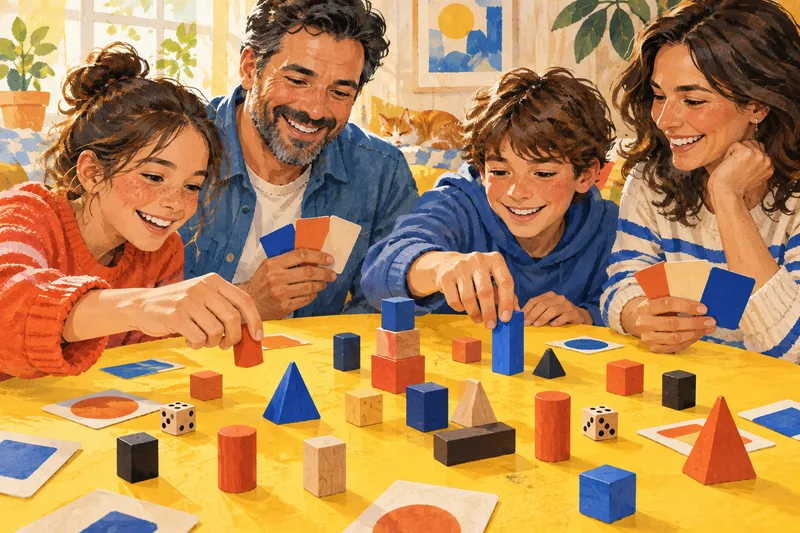
A good family game gives each person a reason to stay at the table. That may be a close race, a smart move, or a drawing so odd that the whole room laughs. A large pile of pieces does not make it better.
My pick for most groups is Ticket to Ride. It has a clear goal, short turns, and enough choices to keep adults keen. But the best family board games depend on who will play. A quiet pair needs a different game from eight cousins after dinner.
These seven picks cover both. Each has a job: a first board game, a quick game, a calm puzzle, or a loud party. Match that job to your family before you buy.
The best family board games at a glance
| Game | Best fit |
|---|---|
| Ticket to Ride | My all-round pick. 2-5 players, ages 8+. |
| Kingdomino | A short game with little reading. 2-4 players, ages 8+. |
| Azul | A close tile puzzle. 2-4 players, ages 8+. |
| Cascadia | A calm choice for nature fans. 1-4 players, ages 10+. |
| Sushi Go Party! | A bigger group that likes card combos. 2-8 players, ages 8+. |
| Telestrations | Laughs with a crowd. 4-8 players, ages 10+. |
| Flip 7 | A quick game of nerve. 3 or more players, ages 8+. |
The ages are the publishers' guides, not a test your child must pass. Reading, focus, and comfort with losing matter too. None of these is my first choice for a preschooler playing alone.
1. Ticket to Ride: my best pick for most families
.jpg)
2-5 players · Ages 8+ · About 30-60 minutes
Ticket to Ride turns a map of North America into a race for train routes. Collect colored cards, spend sets to claim tracks, and link the cities on your tickets. The shared board lets kids see the plan take shape.
I favor it as a first step beyond roll-and-move board games. You can explain the goal without a long speech. Yet adults still have to weigh two good moves: take more cards, or claim a route before someone else does.
There is tension without a pile of special powers to learn. The catch is that tracks can fill up. A child who has planned one route may find it blocked. Before the first game, make clear that this is part of the race. It is not a personal attack.
The map also needs space. Check your table before you set out snacks and drinks. I would choose a smaller card game for a tray table or a packed kitchen counter.
Choose it for: a family that wants one full board game to return to each week. Skip it if: blocked routes cause more upset than fun, or you need to finish in 15 minutes.
Buy the original USA game for this pick. The series has many versions and expansions. A familiar name on a box does not mean it has the same map, rules, or player count.
2. Kingdomino: the best short family game
2-4 players · Ages 8+ · About 15 minutes
In Kingdomino, each person builds a small kingdom from two-part tiles. Join matching types of land and seek crowns. Big areas need crowns to score, so a huge patch of land can be worth nothing.
The smart bit is the draft. A strong tile can put you later in line for the next pick. Kids get a clear choice now with a cost they can see next turn. There is no need to read a new card each time.
I like this balance for mixed ages. Younger players can focus on matching land. Adults can think ahead about space and turn order. The shared choice of tiles gives everyone a reason to watch.
It is still a spatial puzzle. A child may love the castles but struggle to fit a tile within the five-by-five limit. Show that rule with a few tiles before you start. A quick practice makes more sense than fixing a whole kingdom at the end.
Choose it for: a school-night game or kids who dislike lots of reading. Skip it if: your group wants a long story, big surprises, or room for five players.
Kingdomino is my pick when time runs short. A game that fits the evening is worth more than a grand plan that never gets played.
3. Azul: the best family board game for a close puzzle

2-4 players · Ages 8+ · About 30-45 minutes
Azul asks you to take tiles of one color and fill rows on your board. Finished rows feed a tiled wall. Where you place a tile affects what you score.
The choices look small. They are not. Take a color you need, and you leave the other tiles for everyone else. Wait too long, and you may have to take more than you can fit. Spare tiles can cost points.
That makes Azul my pick for kids and adults who enjoy looking ahead. It has no long blocks of text to read. The colors and patterns do much of the work. Help new players follow the scoring before you expect them to plan a clever move.
Do not mistake a pretty tile game for a gentle one. A player can leave a poor choice for the next person. I would choose Cascadia instead if your family likes to work on its own plans with less direct pressure.
Choose it for: a small group that wants a sharp puzzle with few words. Skip it if: losing points feels harsh, or slow choices tend to stall your game night.
Use the base Azul game for this comparison. The name appears on several other games with different rules. You do not need to add any of them to get started.
4. Cascadia: the best calm choice
1-4 players · Ages 10+ · About 45 minutes
Cascadia pairs land tiles with wildlife tokens. Build a habitat, then place bears, elk, salmon, hawks, and foxes in the patterns that score. The base game also has a solo mode.
I favor it for families who like puzzles more than conflict. You still share a pool of choices, so you cannot ignore the other players. But each person builds a scene of their own. No one sweeps in to tear your map apart.
There are two linked goals: join areas of land and place wildlife well. A tile may help one goal more than the other. That gives adults a reason to think without making every turn a long list of actions.
The tradeoff is the scoring. Each animal has its own needs. Kids who can match tiles may still need help reading the score cards. Keep those cards where everyone can see them. Choose the simpler scoring choices in the rules for a first family game.
Choose it for: nature fans, quiet evenings, or a household that also wants solo play. Skip it if: you want a noisy party game or have less than half an hour.
Of these family board games, this is my pick for a child who enjoys building a picture more than beating a sibling. It is still a contest, but the fun does not depend on a big clash.
5. Sushi Go Party!: the best card game for a bigger group

2-8 players · Ages 8+ · About 30 minutes
Sushi Go Party! uses a pick-and-pass system. Choose one card from your hand, reveal it with the group, then pass the rest. Collect sets of food cards to earn points.
I like that everyone makes a choice at the same time. A child does not have to wait through seven full turns to act again. The cute food art gives the game a friendly face, but the set choices offer real thought.
The menu can change from game to game. That helps keep a small collection fresh. It also adds setup. You must choose the dishes, sort the deck, and explain what each one does.
Start with the first-game menu in the official rules. A new group should learn the rhythm before it tries lots of new card effects. If you change the menu every round, younger kids may spend more time asking what cards mean than making a choice.
Choose it for: five to eight people who want a light contest. Skip it if: sorting cards or teaching new scoring rules will feel like work.
This is the Party edition. Check the full title when you buy. The smaller original game is a different purchase with a different player range.
6. Telestrations: the best pick for laughs
4-8 players · Ages 10+ · About 30 minutes
Telestrations 8 Player, 2nd Edition turns telephone into a sketchbook game. Draw a prompt, pass the book, and let the next person guess. That guess becomes someone else's drawing.
My reason to choose it is simple: a bad sketch can make the game better. The reveal lets everyone see how one word changed on its trip around the group. There is less pressure to make the best move than in a strategy game.
It needs the right crowd. A reluctant artist may still feel put on the spot. Keep the jokes about the strange chain of guesses, not a person's skill. And give each reader enough time to understand the prompt.
In a discussion of Telestrations with adults, several players praise the ordinary family version. You do not need a more adult theme to make a grown-up group laugh.
Choose it for: a family party with at least four willing sketchers. Skip it if: you want a deep contest, have only two players, or need a quiet game.
My full Telestrations review covers group size, the current box, and the parts of game night it suits best.
7. Flip 7: the best quick game of nerve
3 or more players · Ages 8+ · About 20 minutes
Flip 7 gives you a small choice with a loud result: take another card, or stop. New numbers add points. A number you already have can wipe out your round.
This is my pick to fill a gap before dinner or start a game night. The idea is easy to grasp, and each new card gives the group something to watch. There is little setup beyond a shuffle and a way to keep score.
Luck is a large part of it. A careful player can bust early. A reckless player can get away with one more card. Kids who need every result to feel earned may find that hard.
Special cards also change the flow. An adult should learn those first, then teach them when they appear. Keep the first few rounds about the choices, not the race to win.
Choose it for: a light game with quick turns and a bit of cheering. Skip it if: you want deep strategy or dislike losing a whole round to a draw.
The current listing is the second edition. My Flip 7 review explains the risk, scoring, and common rule questions.
How to choose family games that get played
Count the people who usually show up
Buy for a normal night first. A game for eight sounds useful, but a family of three needs it to work with three. Telestrations starts at four. Flip 7 is listed for three or more. Kingdomino, Azul, and Ticket to Ride all allow two.
For a family games night with six or more people, I would start with Sushi Go Party! or Telestrations. For two adults and two kids, Ticket to Ride is a great choice if you have an hour.
Think about what losing feels like
A close race is fun for some kids and a sore point for others. Look at how the game creates that race. Azul can cost you points. Ticket to Ride can block your route. Flip 7 can take away a whole round.
Cascadia keeps more of the focus on your own work. Telestrations can be played for the reveal with no score. Neither choice means a child will never get upset. It gives you a different kind of evening.
Leave time to learn and put things away
The time on a box is a guide for play. A new game also needs an explanation. Add time to sort pieces, deal cards, and answer questions. Do not start a 45-minute game 45 minutes before bed.
For a first play, teach the goal and one turn. Show how points work with a clear example. Let kids make their own choices once they know the rules. Constant advice can turn their turn into yours.
Choose a theme they want to look at
Trains, wildlife, food, and funny sketches all offer a different pull. A child who loves birds may give Cascadia more patience than an abstract puzzle. Theme will not fix rules that are too hard, but it can help a family want to learn.
Check practical needs too. Small tiles need a clear surface. Cards need room to fan out. Readable text and easy-to-tell colors matter more than a grand box. The best family board games fit the people who will use them.
Common questions about family board games
What should I buy as a first family board game?
My pick is Ticket to Ride for ages eight and up with time for a full game. Choose Kingdomino if you want fewer words and a shorter session. Both give kids choices they can see on the table.
Which family games work for adults too?
All seven can. Azul and Cascadia give adults more room to plan. Telestrations puts the group at the heart of the fun. A good game does not need to be hard to teach to hold an adult's interest.
What if we want to work as a team?
These picks focus on contests and shared laughs. For a cooperative puzzle night, see my escape room board games to play at home. Those games ask you to solve clues together. Many lose their surprise once solved, so they serve a different role from a weekly family favorite.
Do we need more than one game?
No. Start with one that fits your usual group. Play it a few times before you add more. If you do want a pair, I would match Ticket to Ride with Telestrations: one for a close race, one for a big laugh. The point is to spend a good evening together, not fill a shelf.